
ARMANDO JENIK | 1945 - 2026 🫧 MILLION BUBBLES
LIVING WATERSArmando Jenik is an acclaimed underwater photographer known for vivid split shots and wide-angle ocean imagery, capturing marine life with striking color, precision, and emotion.
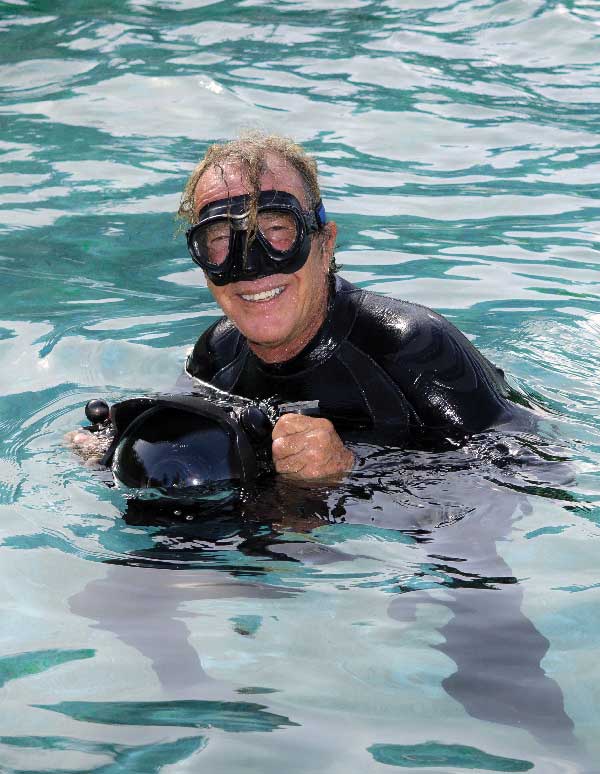
“I became an underwater photographer in an unexpected way.”
I volunteered for the Israelis in the ’67 war, and the war ended so quickly that I found myself in Israel with lots of time on my hands. That was when I began exploring Eilat, a town on the Red Sea. One of my favourite haunts became the aquarium at Coral World. The aquarium director, David Friedman, noticed my fascination with the fish, and knowing that I was also from Argentina, invited me to his house for dinner with his family. The next day he found me a job collecting fish for the University of Jerusalem’s Zoology Department. David and I began going on collecting trips in the Red Sea for the university, and that’s how I discovered my love for the ocean. I have always thought that David and I shared the same vision—he created scenes in a tank, and I began capturing them on film.
My first underwater camera was a Calypso designed by none other than Jacques Cousteau. The Calypso gave way to the Nikonos with 28mm and 35mm lenses. Soon the 15mm lens was offered, and I began my love affair with wide-angle photography. The 15mm had a few drawbacks: one was the $1500 price tag and the other was that it worked only underwater. Bates Littlehales, photographer for National Geographic, solved that problem by designing the Ocean Eye housing for a Nikon F camera with a dome port. This rig allowed the photographer to do both topside and underwater compositions in the same frame. I call these “split shots,” and they have become a mainstay of my work. The Nikon F used standard 35mm film and many of the images in this book have been digitized from slides I took during those early days.
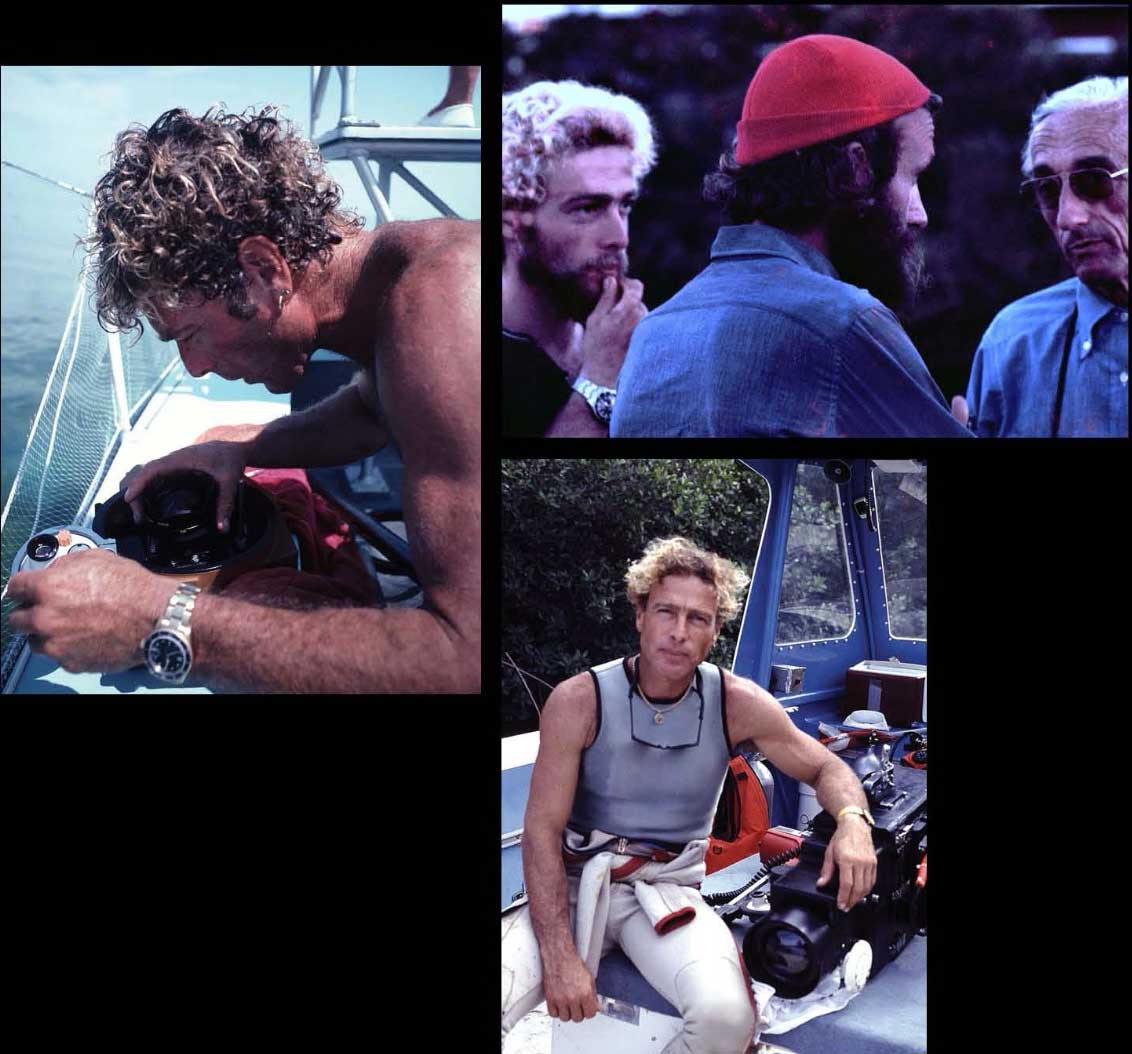
“The strobe is like an underwater paintbrush . . .”
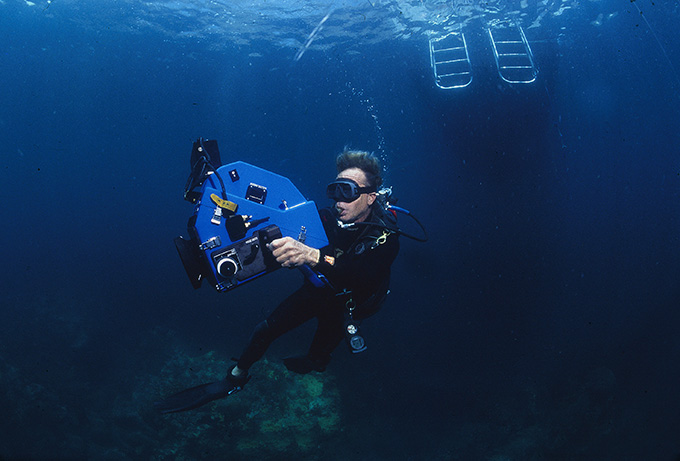
Sometimes the action is so fast and furious that it leaves no time to compose through the viewfinder, so I developed a style that I call “shooting from the heart.” Nowhere is this more evident than in the split shots taken of racing sailboats and windsurfers. Underwater shooting from the heart translates to putting the camera as close to the subject as possible and when working with marine life, to light the subject with a strobe. The trickiest part is balancing the artificial and the natural light. The strobe is like an underwater paintbrush and brings out the intense colors of the corals, sponges and fish.