
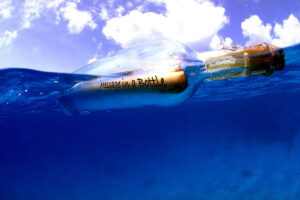
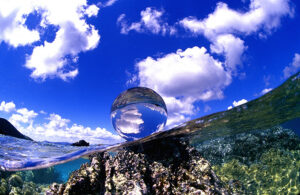
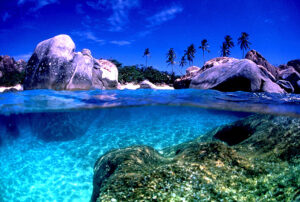
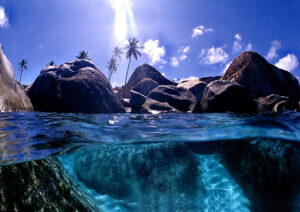
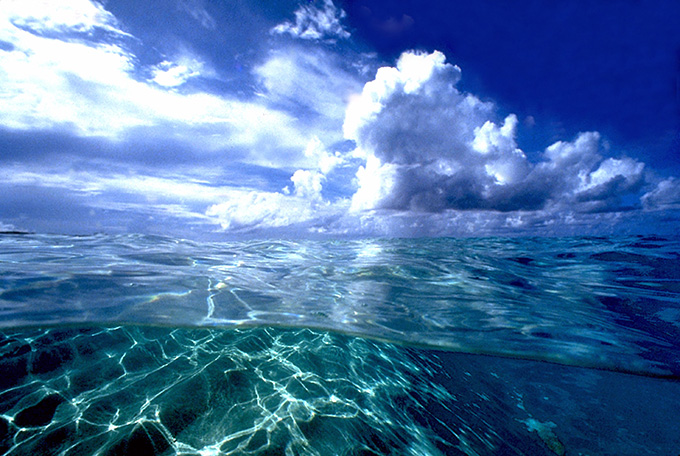
Armando called them “split shots” — photographs that hold two worlds in a single frame, the waterline cutting through the middle. The technique had a specific father: Bates Littlehales of National Geographic, who designed the Ocean Eye housing for a Nikon F with a dome port so a photographer could compose above and below in the same exposure. Armando took it as his own.
Before the Ocean Eye, his first camera was a Calypso — the original 35mm underwater camera, designed by Jacques Cousteau — given to him by his father in Israel in 1968. Then the Nikonos, then the 15mm wide-angle that cost $1500 and only worked underwater. Each one taught him something. The Ocean Eye is what opened the split, and the split became his signature.
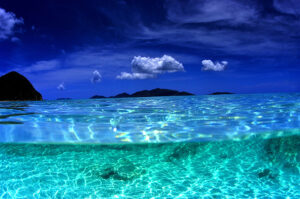
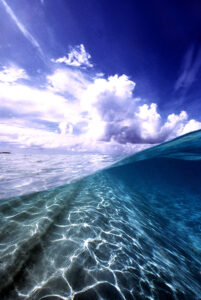
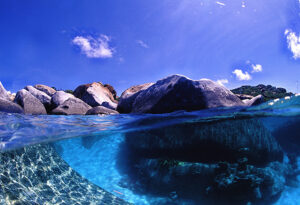
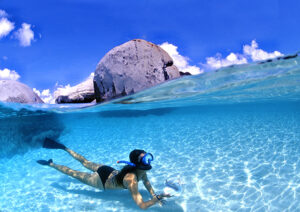
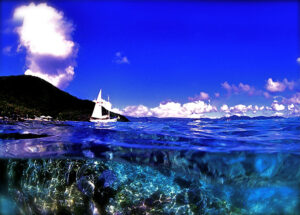
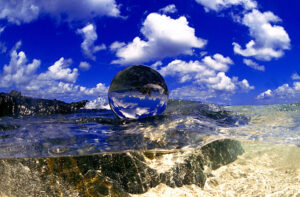
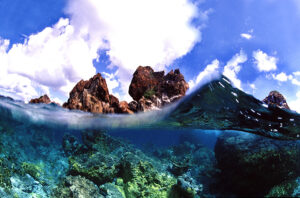
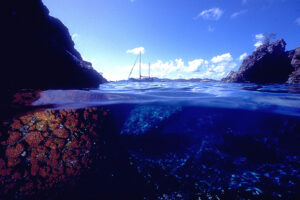
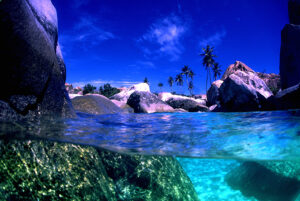
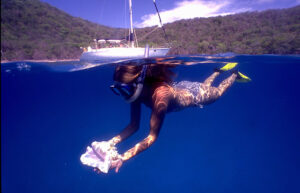
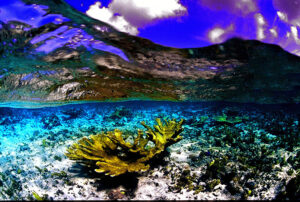
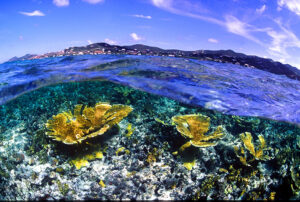
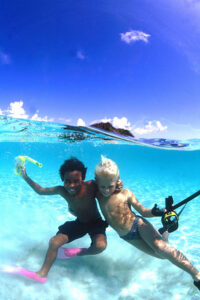
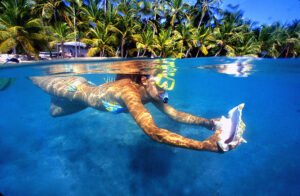
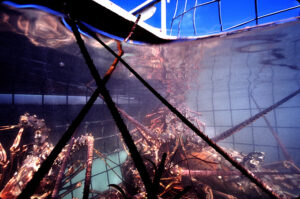
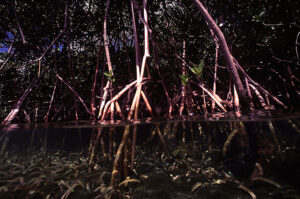
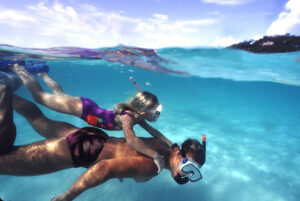
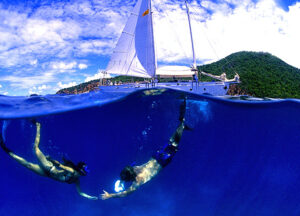
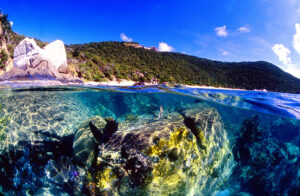
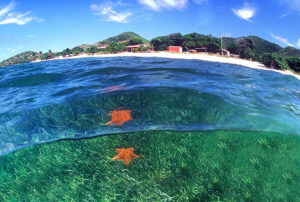
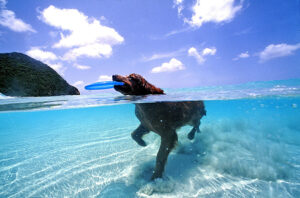
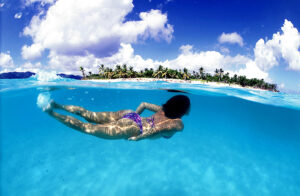
The Ocean Eye is what opened the split, and the split became his signature.
He took it places it was not built for. At one of the first Rolex regattas in St. Thomas, he jumped from the committee boat, swam to the marker buoy, popped up as the fleet came through, and fired from two or three feet away. He got bumped. He said he listened to the sound of the hulls breaking water, and because of the danger, he fell in love with it. Years later at the BVI Spring Regatta, he swam hard toward Pyewacket on her first run and saw something heading for him he thought was a shark — it was the counter keel, the crew screaming his name across the wind. The shot survived. So did he.