
Tiburones
SharksHe was photographing this shark, on this reef, on this afternoon — and the shark, most of the time, was photographing him back.
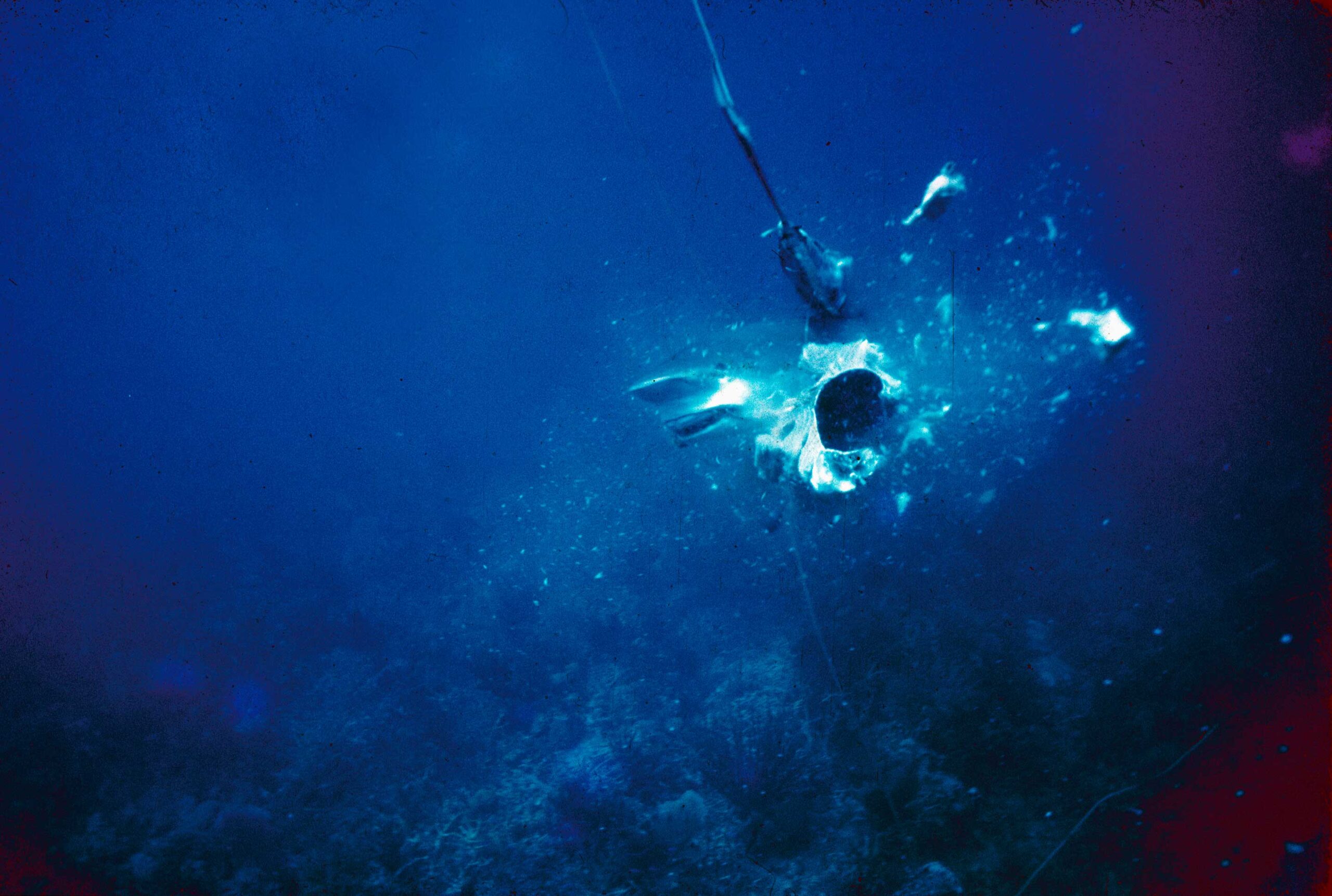
Armando had more stories than most. In 2006, a fresh whale carcass surfaced off Salt Island and drew a feeding frenzy of tiger sharks. He and his friend, photographer Jim Scheiner, went in the water with them. On the second day, once the tigers had eaten enough to slow down, Armando moved in to within two feet of them. They flared their pectoral fins in warning. They did not strike. He came out with the footage, and with a story he would tell for the rest of his life.
He also made a quieter contribution to shark science as the underwater photographer on a National Geographic documentary about marlin catch-and-release: he noticed that the exhausted, released marlin were sending distress signals that the sharks answered instantly, turning the release into a kill. The protocols changed because of what he saw through the viewfinder.
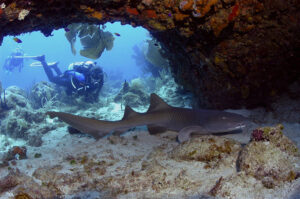
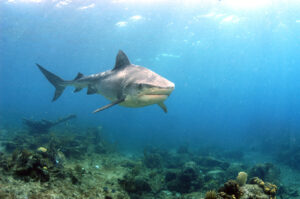
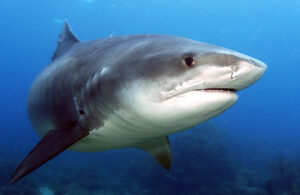
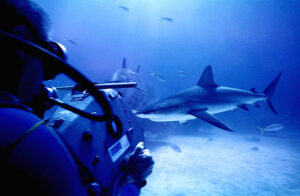
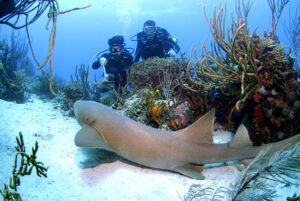
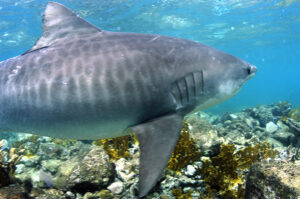
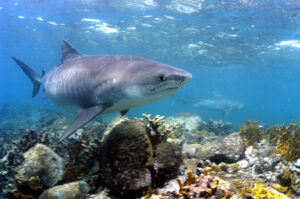
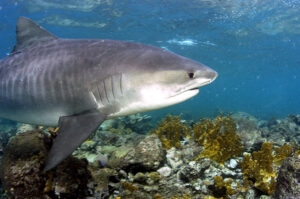
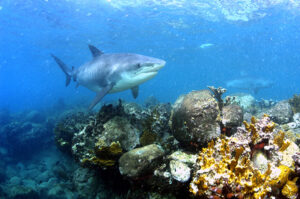
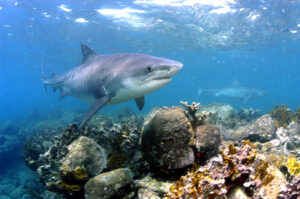
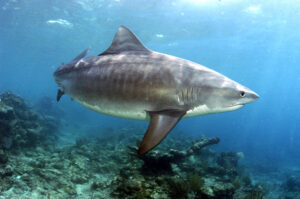
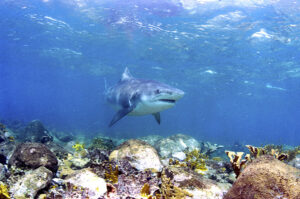
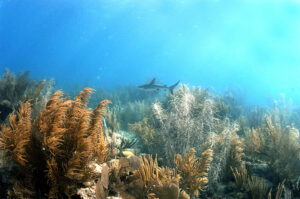
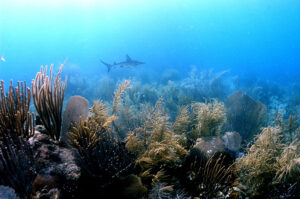
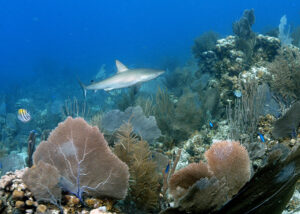
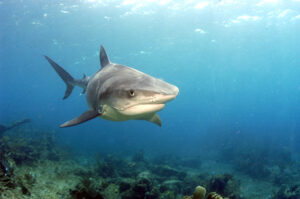
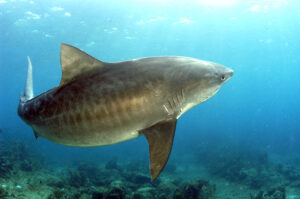
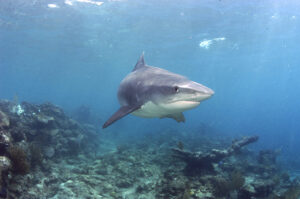
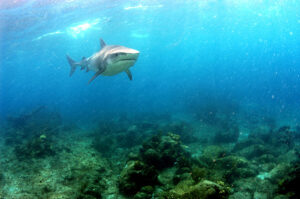
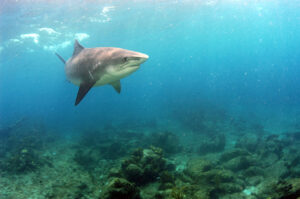
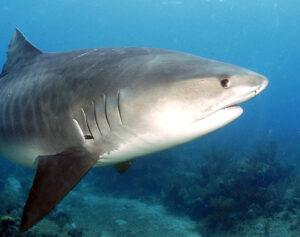
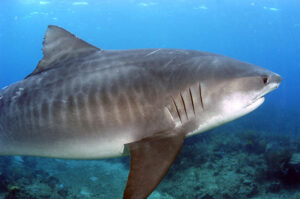
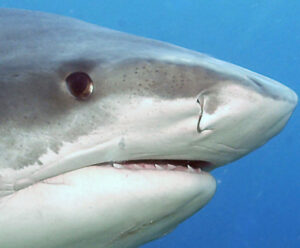
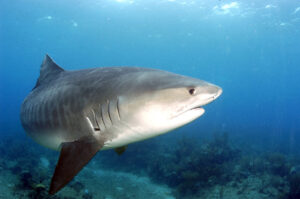
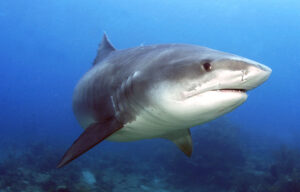
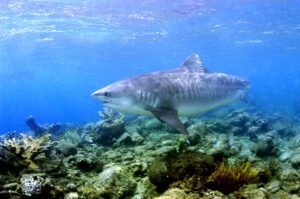
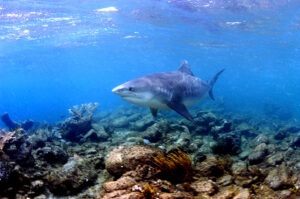
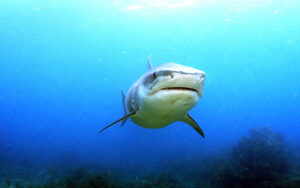
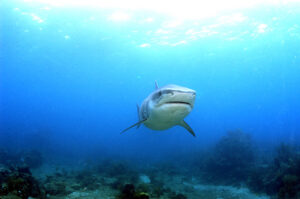
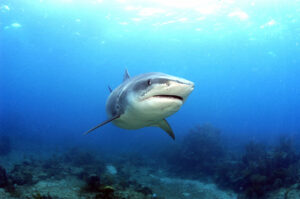
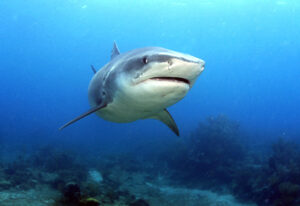
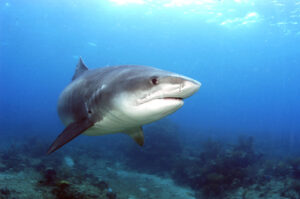
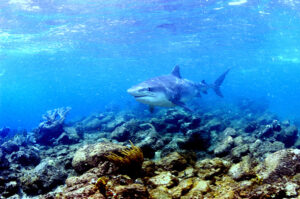
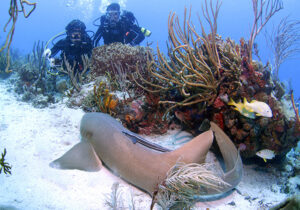
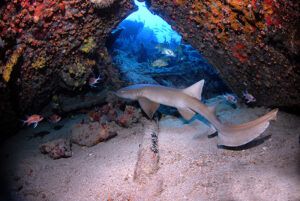
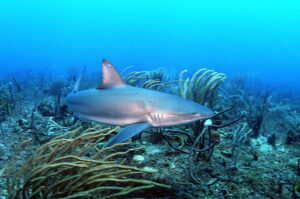
You can see the small scars a long life in the water leaves.
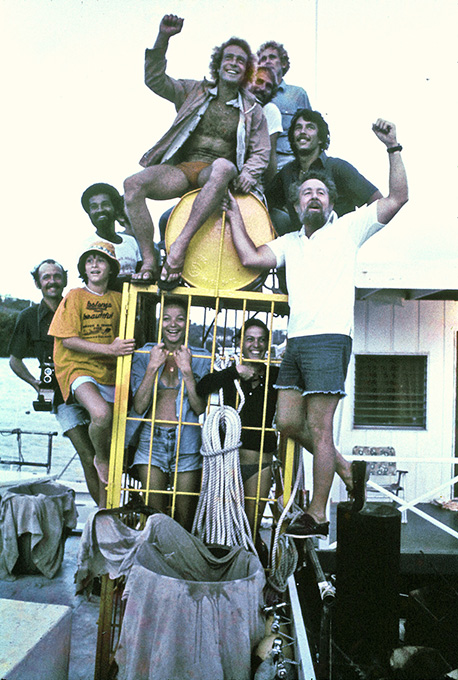
Not long after Jaws came out in 1975, Coca-Cola ran a promotional stunt in St. Thomas that placed a vending machine inside a shark cage — the joke being that in a shark-infested world, even a Coke was worth protecting. Young Armando and a group of local divers walked past it and saw something the marketing department had not seen: a perfectly good shark cage going to waste.
So they borrowed it. They left a note on the vending machine explaining that the cage had been taken in the name of science.
It’s rumored that Armando kept a shark cage outside his house for the rest of his life. Whether this was that cage or not, he never quite said.