
The first time a writer for The VI Magazine met Armando, he almost ran him over with a surfboard. Armando was floating in a wave, invisible, and the surfer mistook him for a turtle. After the set, a voice came out of the water telling the surfer that next time he should aim for the head — it would make a better shot, as long as he didn’t hit the camera. A friendship started there. It was, people said, a very Armando way to meet somebody.
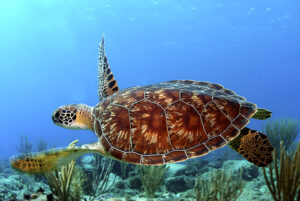
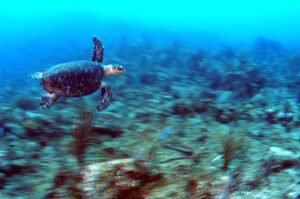
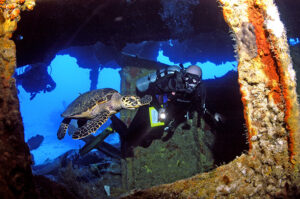
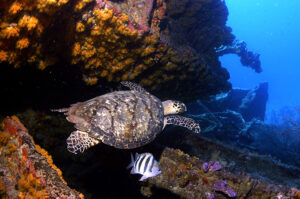
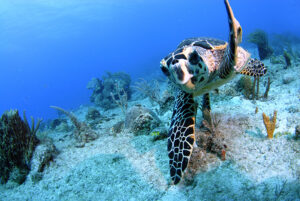
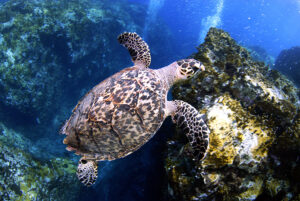
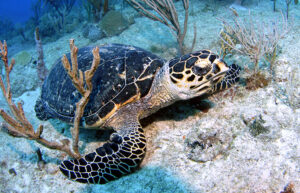
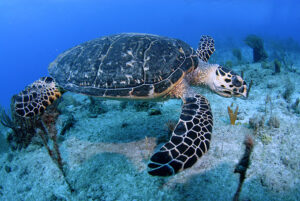
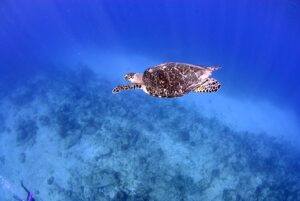
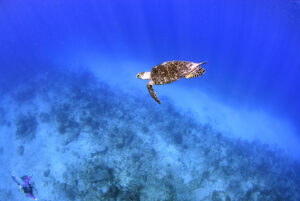
The trick, Armando learned, is to become uninteresting.
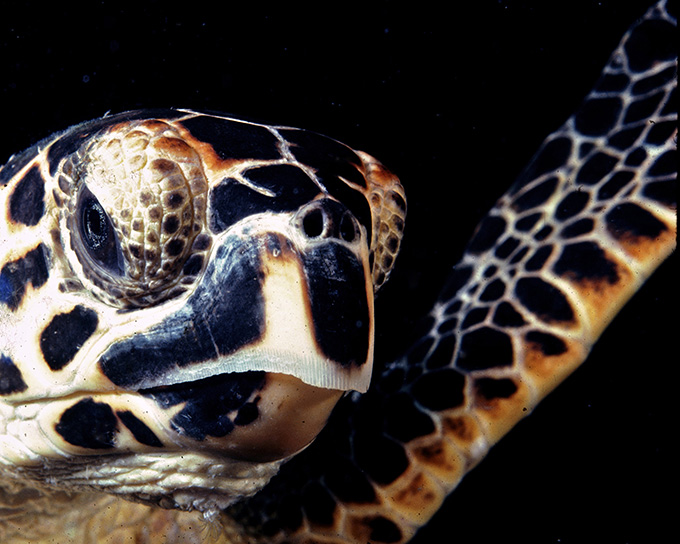
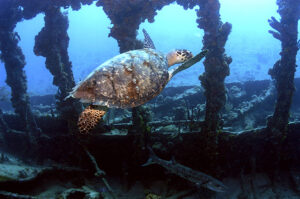
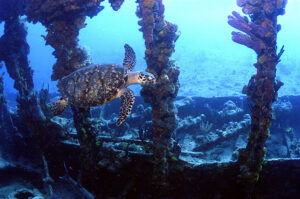
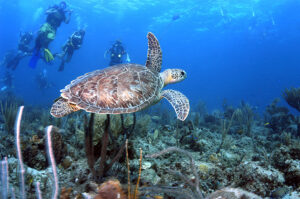
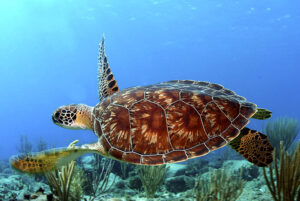
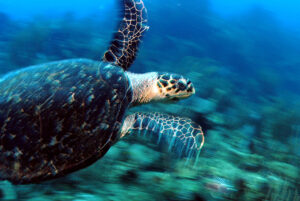
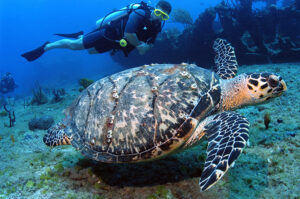
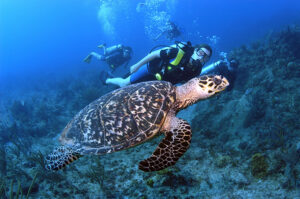
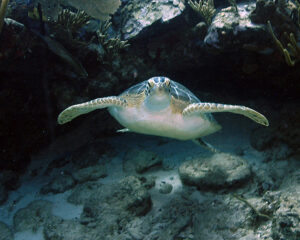
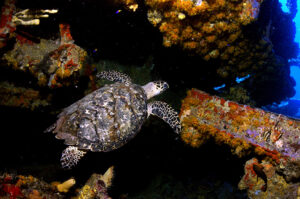
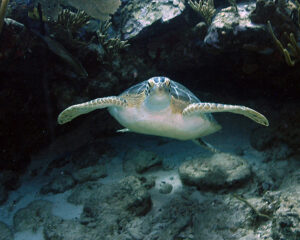
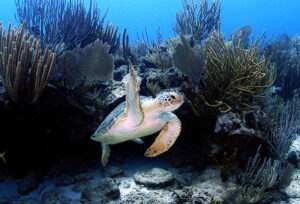
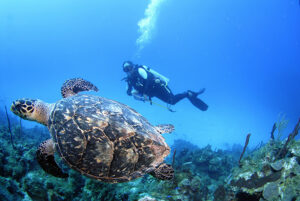
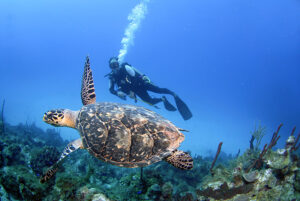
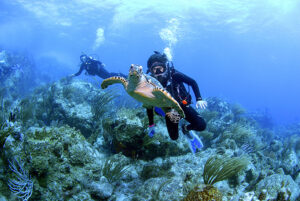
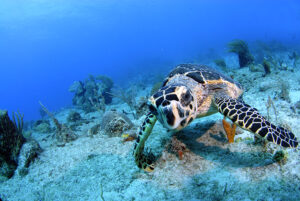
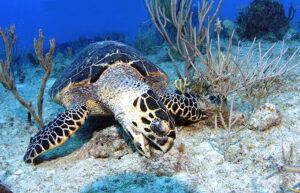
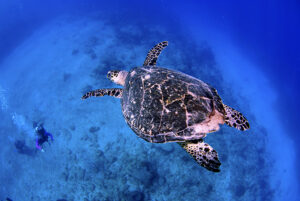
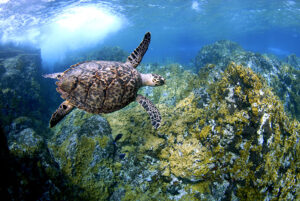
The hawksbills and greens of the BVI are not as easily approached as the man who blended in with them. But there are reliable places. The reefs around Anegada, Cooper Island, and the south side of Norman Island hold resident turtles that the dive guides know by sight and by scar. Greens graze the seagrass beds in the shallows, cropping them like lawns. Hawksbills work the deeper coral heads, prying at encrusting sponges that would split your lip. Occasionally, a leatherback passes through open water on its way somewhere else.
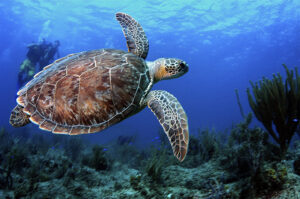
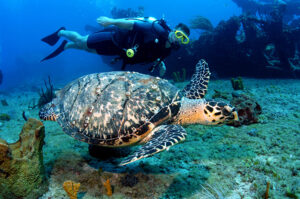
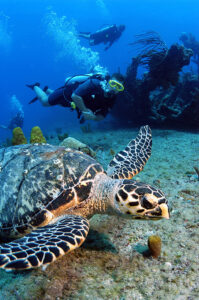
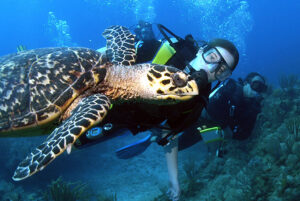
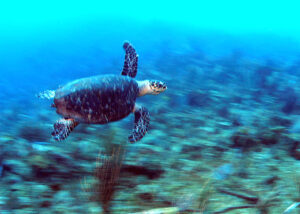
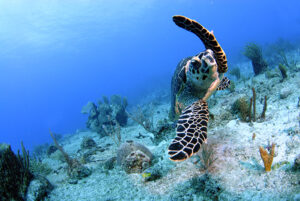
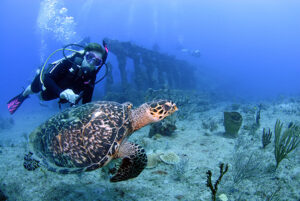
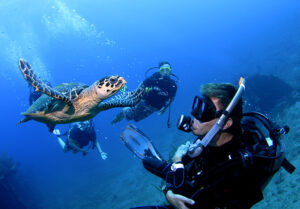
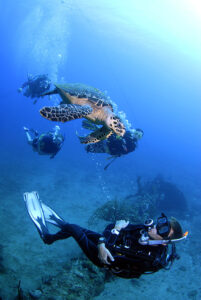
Approach slowly, from below if you can, and stop before you think you need to. A respectful diver will often be tolerated for several minutes. A few turtles will come closer, curious about their own reflection in the dome. The best frames almost always come at the moment of surfacing — the body tilted upward, the flippers still, the sun breaking across the shell before the creature returns to the blue.