
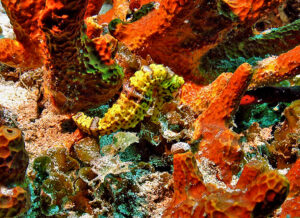
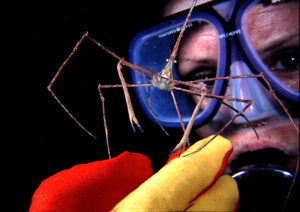
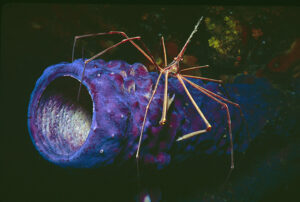
Most of the reef is invisible until you slow down. The secretary blenny lives in a hole the width of a pencil and only shows its face. The arrow crab tips its spider legs across a barrel sponge, patient and deliberate. The juvenile drumfish flicks a white banner twice as long as its body. The pederson cleaner shrimp waves its antennae at passing fish, offering to work.
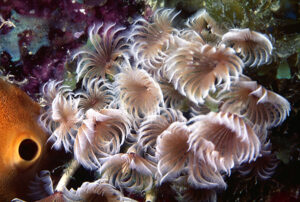
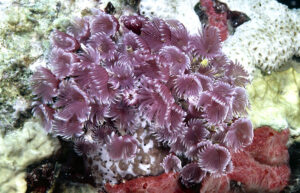
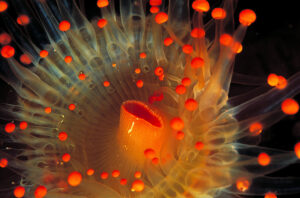
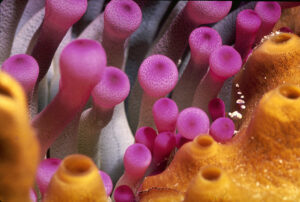
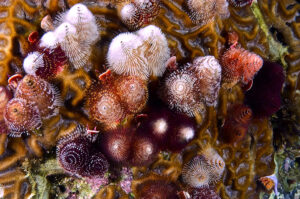
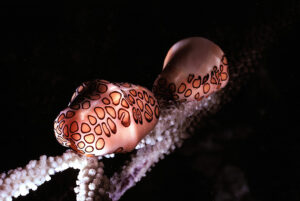
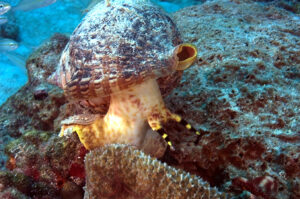
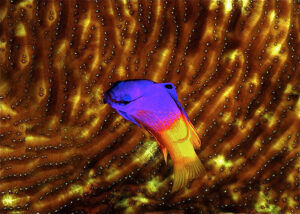
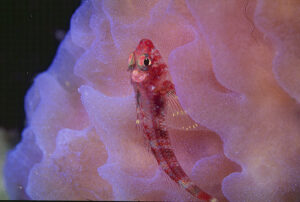
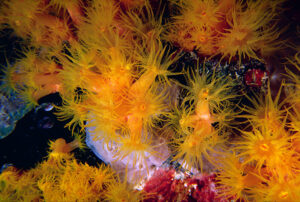
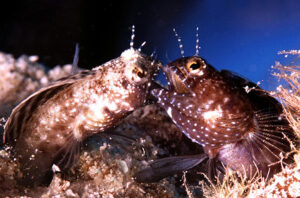
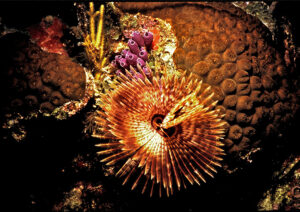
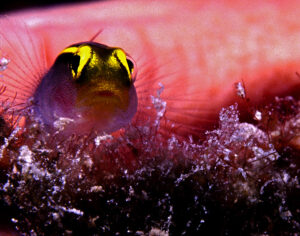
It is also the shrimp on the anemone, the whole life compressed into the glint of a single eye.
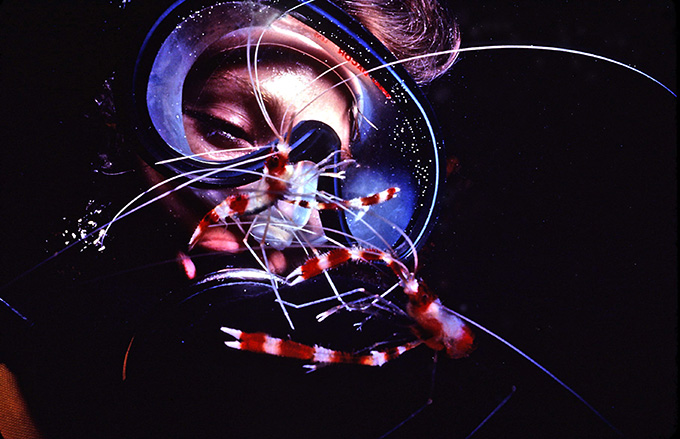
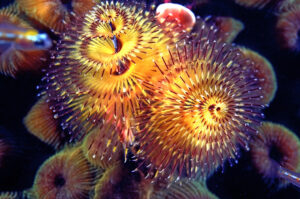
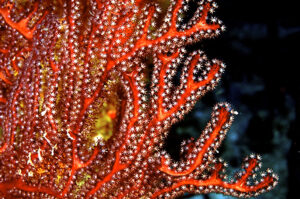
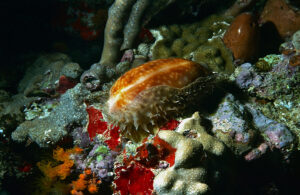
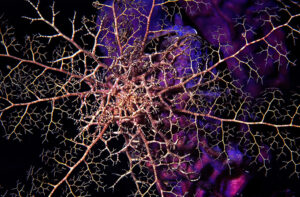
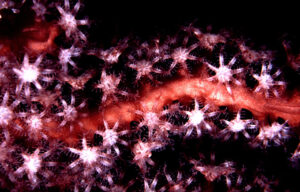
Armando loved the wide angle more than the macro — his signature was the sweep of split shots and the intimacy of a diver beside something large. But he knew the value of the close look, and many of his prints are small portraits: an eye, a fin, a mouth. Macro photography is a trade of scale. You give up the panoramic reef for a square inch of it, and the square inch turns out to be enough. A single barrel sponge can fill an entire dive. A sea fan, examined one frond at a time, holds a dozen species most divers have swum past for twenty years without seeing.
The equipment is specific. A 60mm or 105mm lens, a pair of strobes angled in tight, a focus light that doesn’t spook the subject. The rest is attention. You learn to read coral the way a tracker reads ground — which cracks are inhabited, which overhangs hide what, where the cleaning station is and who will show up to be cleaned.