Cantantes
SingersA whale’s song carries for miles underwater. You feel it in your chest before you hear it in your ears
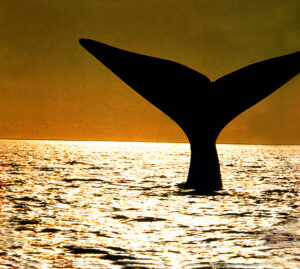
A humpback whale’s song carries for miles underwater. You feel it in your chest before you hear it in your ears — a low vibration that arrives from everywhere at once, and then a note, and then another. No one knows for certain why they sing. The songs change from year to year, and every whale in a population eventually learns the new version. They are the only animals on earth, besides us, that do this.
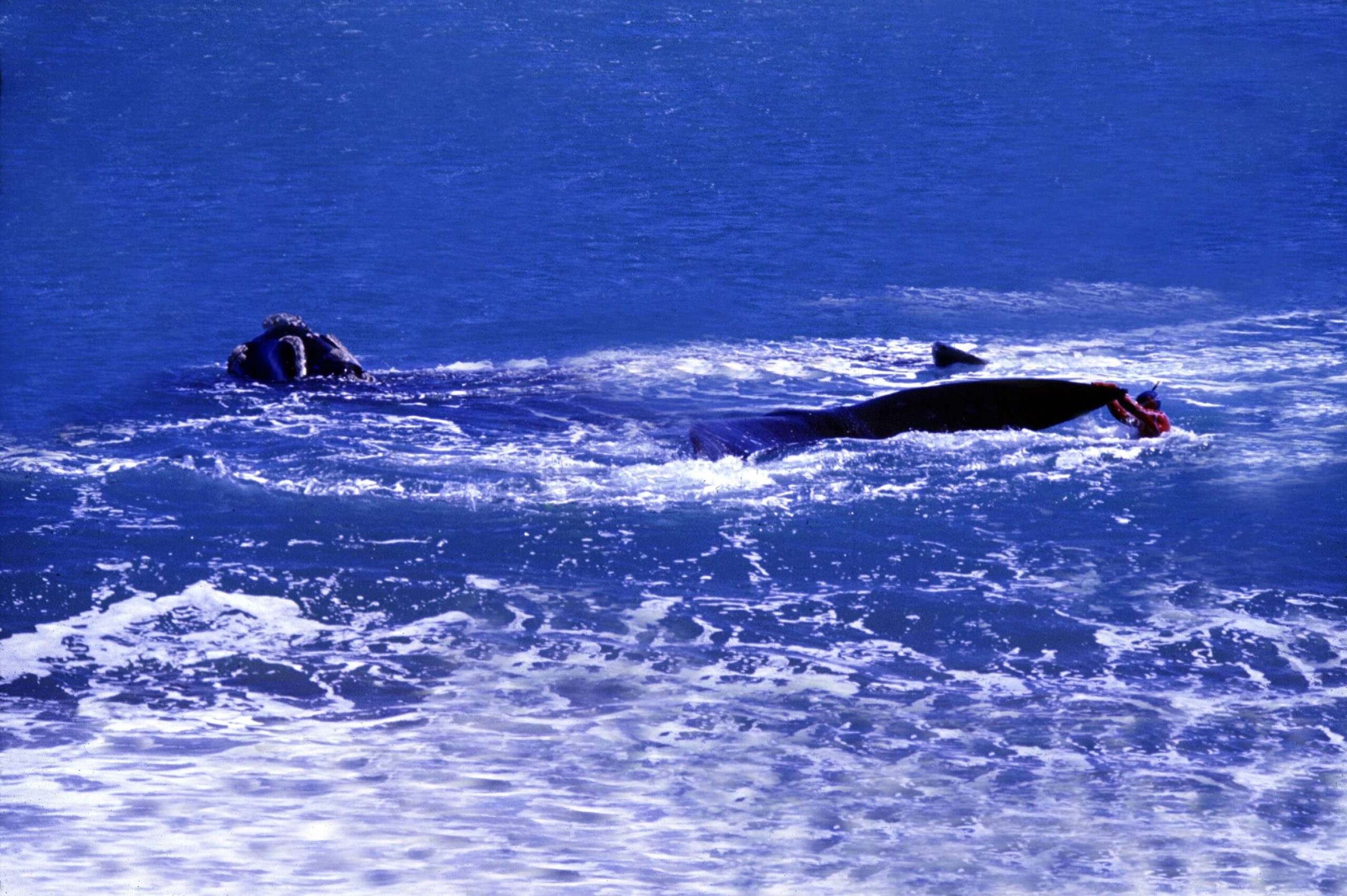
Armando’s love for the sea began with them. As a young man in Patagonia, he free-dove the San Matias Gulf with Southern Right Whales.
He told the story often. One morning his friends were still asleep; he went jogging on the beach, saw a mother, father, and baby whale close to shore, pulled on his wetsuit, and swam out. The mother surfaced. He reached up and held her tail. She carried him a while and then let him go. He said afterward that once you had done that, you were afraid of nothing.




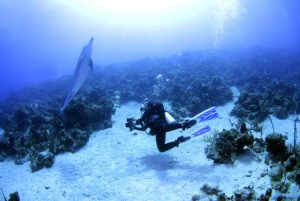







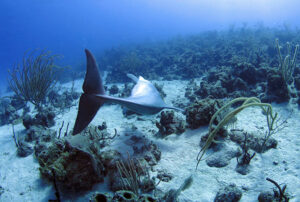
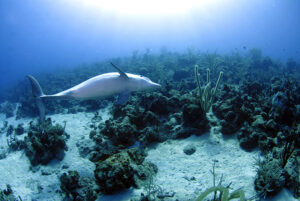
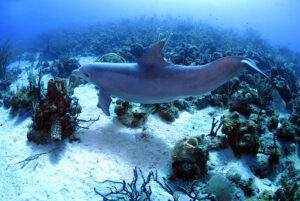



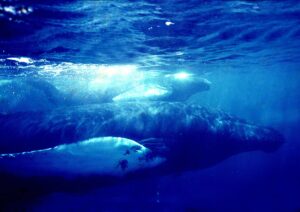


The song, he knew, was always there, whether he was in the water for it or not.
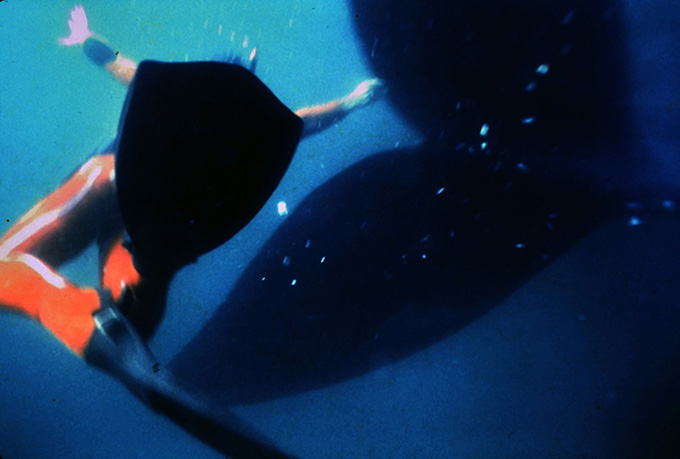
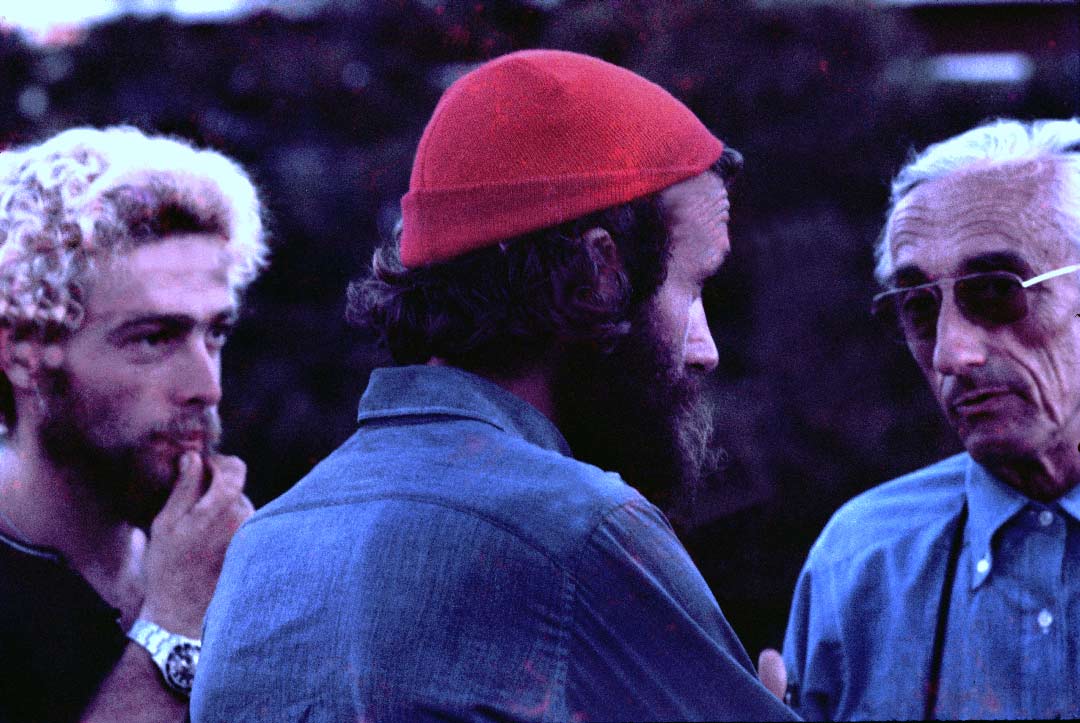
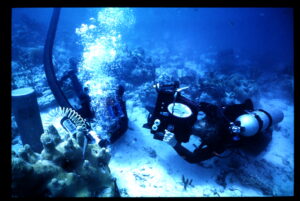
When Jacques Cousteau came to St. Thomas in the 1970s to film humpbacks for The Singing Whale, Armando worked the boat alongside the crew. As Cousteau climbed the stairs to leave, he turned and threw Armando his red stocking hat and called out to see him in Marseille in a few weeks. Armando had a wife and a young family, and the trip was not meant to be. He never stopped filming humpbacks anyway.
It gave him the instinct not to chase. Dolphins and whales, he understood, decide on their own terms. You keep the camera ready, you keep the engine off, and you wait.
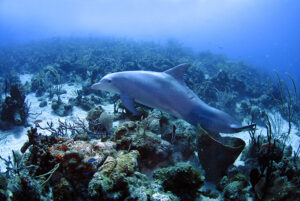
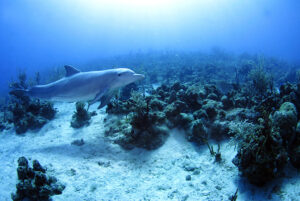
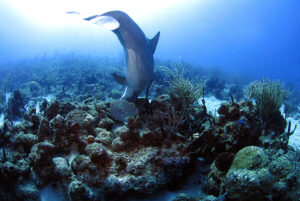
The BVI is not prime cetacean country, but they come through. Bottlenose and spotted dolphins move the channels in pods and singles, surfing bow wakes and vanishing. Humpback whales pass between the Silver Bank and the North Atlantic feeding grounds from January to April, their songs traveling underwater long before the animals appear.